

LISTEN NOW
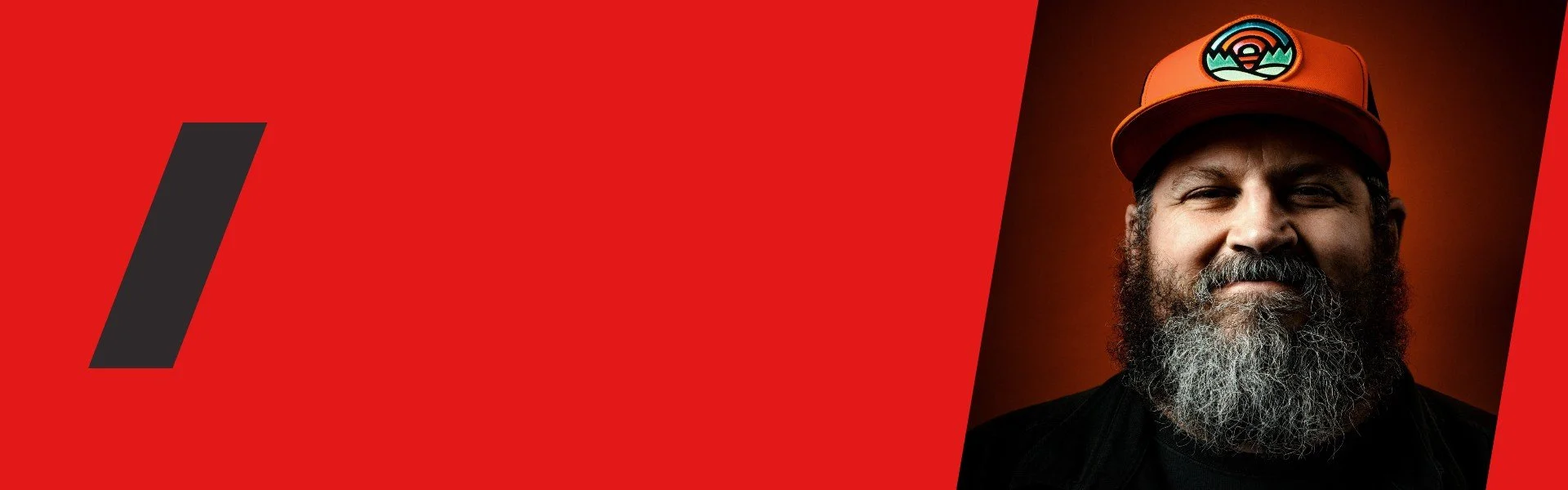
AARON DRAPLIN
EP.92
Other places to listen: APPLE PODCASTS | SPOTIFY | POCKET CASTS | OVERCAST
One More Question / Rewind / Episode 92
How does design help the underdog win?
Aaron Draplin, founder of Draplin Design Co. and co-founder of Field Notes | Episode 92
Originally released as episode 34, February 2021. Back as episode 92, November 2026. Updated 3 November 2026.
The short answer
When you've only got a few moves, you'd better make them good ones. Aaron Draplin, founder of Draplin Design Co. and co-founder of Field Notes, knows just how far a few good design decisions can go. He joins Ross Drakes to talk about making the most of limited resources, helping people take control of their own brands, and finding opportunity in the projects others might overlook.
Key takeaways
Small brands only get a few moves, so make every one count.
A good sandwich with bad branding can take the sandwich down with it.
Give clients the tools to take control of their own brands.
Set filters, so anyone using the brand still sounds like the brand.
Fix a customer's problem without making them jump hurdles, and you keep them for life.
Ross's take: what this means for your brand
Ross Drakes, founder of Nicework: You can do everything now. Every channel, every format and every tool is open to you. But I’d say if you want to activate your brand, pick one or two places to do the work, and lean into them. A few good moves will outplay anyone trying to do it all. And if you work with a creative team, judge them on whether the way they work puts the brand back in your hands, in a form you can use. That's how we work at Nicework.
Highlights
"I really like arming people so they can look like they should be taken seriously." Aaron Draplin, founder of Draplin Design Co.
"Slow and steady wins the race and also feeds the soul." Aaron Draplin, founder of Draplin Design Co.
"That's branding. I've got that guy for life now." Aaron Draplin, founder of Draplin Design Co.
"Brands can just be decent humans, and companies can be decent humans, and they can just treat humans the way they want to be treated." Ross Drakes, founder of Nicework
About Aaron Draplin
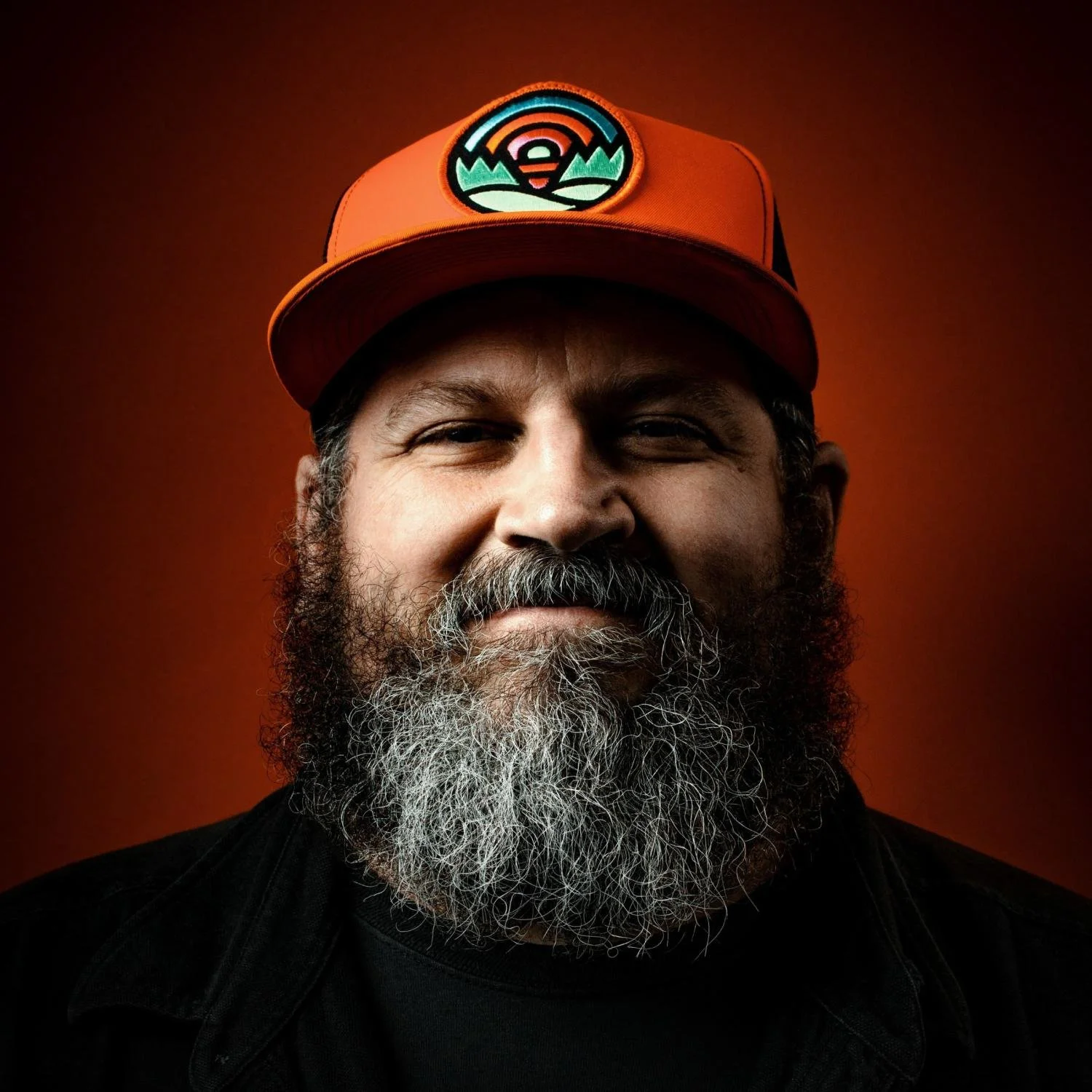
Aaron Draplin is a graphic designer based in Portland, Oregon, and the founder of Draplin Design Co., which he established in 2004 after designing snowboard graphics, serving as art director of Snowboarder magazine and working at Cinco Design. He co-founded Field Notes with Coudal Partners in 2007 and is the author of Draplin Design Co.: Pretty Much Everything (Abrams). His work spans print, identity design and illustration, with clients including Coal Headwear, Cobra Dogs, Patagonia, Ford, NASA/JPL and the Obama administration. He also develops his own products alongside his client work.
Credentials:
Founder of Draplin Design Co., independent since 2004
Co-founder of Field Notes, with Coudal Partners, in 2007
Author of Draplin Design Co.: Pretty Much Everything (Abrams)
Work for Coal Headwear, Cobra Dogs, Patagonia, Ford, NASA/JPL and the Obama administration
Find Aaron here:
Full transcript
-
Ross Drakes: So thank you, thank you very much for coming on the podcast. I really, really appreciate it. So before we hit the record button you were telling me how you believe that you are probably the greatest brand designer of all time, and that nobody on the planet could light a candle to the brilliance of your work and true nuance in everything that you do. Could you talk a little bit more about that?
Aaron Draplin: Thanks for having me. Yeah, yeah, hello.
Aaron: Boy, we have a comedian on our hands now. Who knew that Ross Drakes' second job was to come up with off-the-cuff nonsense like he's saying right now? Because first of all, that's not what I said. That's number one. Number two, you better stick to the graphic arts, Ross, because the delivery is a little tricky tonight. I mean, just at the Charlize Theron auditorium in Johannesburg, it's Ross Drakes' one-hour special titled Ross Drakes Unplugged. I don't know what you'd call it. So just stick to the graphic design, Drakes. Have I met you before? Have I met you before? Because yeah, he comes after me, he comes after me. He wakes me out of a slumber here, I don't know what time it is there, 25 o'clock or something, wakes me out of a slumber and then he says, Draplin, our podcast is near death and you are our only hope. See, isn't it fun, Drakes? It's fun, huh. And then he says come over, talk about branding, and I have to say, man, I don't really know a lot about that stuff, which is the truth, because I go on these podcasts with branders and then I get in trouble, because you got some guy who's branding Amex or something, something big, and I'm branding my buddy's crappy little heavy metal band, and it's just two different worlds. And I don't know how to bring stuff to that table when I'm around branding people. I can tell a funny story though. Years ago a woman was a headhunter and she saw all my logos and things, and she called, headhunting for a big branding agency in town here, and I got excited because I knew what they do. And we started talking money and my responsibilities, and I'd have to get on planes and go sell the jobs and all this kind of stuff. And you do this process where you're all excited, because she came after me based on logos, this is 2010, logos and stuff she had been seeing on my Flickr and my website, and so we go through this big process. She blows a ton of smoke, as they say. I don't know how they say it down in Johannesburg. Blows a lot of smoke, I'm all excited, and then we get to the point where she says, and by the way, we're willing to offer $90,000 a year.
Aaron: I said, well, $90,000 a year, and I said, well, wait, what do I have to wear there? Well, it's business casual. You know, it means you got like a tucked-in shirt and that kind of stuff. But on Fridays you could just wear whatever you want. So that's kind of like a Hawaiian shirt Friday. Oh. But Aaron Draplin, what do you think? And I said, last year I cleared 200,000 bucks and I haven't worn pants in months. Casual Friday or whatever, like what are you talking about? And I was very gentle, but I took the hook, because I thought that was the next step up the ladder for someone like me, who loved reading about these things, trying to learn about these things, applying it to snowboarding brands and stuff, and small steps, and then here is my shot at the big leagues. And I gotta tell you, man, that's where it was like, man, I don't care about any of that. Because that's what that world can be like: meetings about meetings, emails about emails. And that was the closest I got to taking the bait and going after the big thing, 'cause maybe I would know more about that today. But I've just tried to apply consistency these last bunch of years to my friends, or the occasional thing that's a little bit bigger. But I certainly don't consider myself a branding person, you know what I mean? Is that what you guys do?
Ross: We do create brands for people, but not on that huge level. We really like to work with people when we can understand the people behind the product or the service or the company. I think that's where our kind of true magic comes to life, and we can bring their vision to life. And I think that's much more complicated when you're working with a huge company, where that origin point is so far away.
Aaron: Yeah, yeah, of course. I'll go in these interviews and people will say, well, what was it like doing... I didn't brand. You know, I've worked for some big stuff, but "work" is a weird word. I was one little satellite, I was one little freelancer. I didn't build the DNA for some of these things. But see, the game of perception with this stuff is people come after me and they think that I've had a bigger role, and it's like, oh no. And I never said that I did either. That's what's so weird about this stuff. The perception just gets weirder and weirder, and I love bringing it all back down to, like, today I sent a t-shirt in to Alexandria Ocasio-Cortez (AOC). I'm sure as this thing goes up the t-shirt will finally go up, but on Friday AOC said they're struggling to come up with a design for this little thing that was AOC plus me, and I just whipped out a couple things on Friday, just for fun. Just to see if I can even get any attention, and then I got a call on Saturday morning. And they put it up Sunday to test it, and then I think it's going up either now or in a couple hours. But this morning I was sending logos and things and stuff to one of our most controversial and awesome congresswomen in America, right? AOC, she's 31 or 30 years old, she's a kid, and she's holding to task our president and Supreme Court, I mean all sorts of stuff. It's really, really interesting, and I just was a fan. Now, that's usually the kind of level that I'm doing. It's like I just got lucky there. What if I just put that stuff up and she never called back? Well, I do that a lot. But I got the call back, and there was a pittance involved. I told them, I said, I don't really care if I get paid, I'll donate the money to her campaign, honestly, and they can't really do that, for some sort of election commission rules. So I got paid a little something, and I'll take that money and give it right back to some committee to take down Donald Trump's comb-over. It's the committee to get that thing shaved off. Can you believe this jerk that we have up here? Anyhow, okay. How am I doing, Ross, by the way? How am I doing? Are we gonna be okay?
Ross: So, I mean, I think you're doing very well. We're feeling the passion, we're feeling the energy. I'm interested. I think the two things that I love the most about your work: one is you seem to be prolific, so you seem to create volumes of things, and you seem to always find something in anything and get very passionate about it. So now you said it's like my friend's silly little truck or this thing, but you saw something that other people might overlook and go, well, this is not really a thing that's worth my time. And you pour your heart and soul into it. Can you talk a little bit about that?
-
Aaron: Yeah, yeah, yeah, well, thank you for saying such nice stuff. I guess it's all about moves. If it's the food cart, what are the couple moves my buddy gets to make? It might only be the sign and a t-shirt and something to wrap the sandwich in, and that's it, because he can't afford anything past that. So it's like, well, how do we take advantage of what we need to say there, and think through the things that we're not quite seeing? I like that little bit of strategy. Stuff like, you're gonna need an Instagram, not just a campaign but a template. He's not a graphic designer, but can I arm him with something that he could just go back into, one layer on a Photoshop doc? I'll show him how to make another layer, turn one off, turn one on, and then put the new sandwich special. And it's that tiny little bit of strategy just to help arm my friend, who, left to his own devices, would have murdered it. I really like arming people so they can look like they should be taken seriously. That's all I would ever say. It's not to be the best or the coolest or the awesomest or the richest or whatever it is. It's more like most successful. It's like, if you're putting the energy into making a great sandwich out of a food cart, well, I'll put the energy in to make sure that you look like you are. Because that stuff, the good sandwich with bad branding or bad outreach or just bad execution, can take that sandwich down with it. You know what I mean? Like what we do in town here in Portland, and probably anywhere, is you'll see the cute side of things, and it makes you want to go in there and have that drink or have that sandwich or salad or coffee or whatever. Well, they also have a team of people, maybe you guys, coming up with all that stuff, and I really like the stuff when it's the underdog. Because I still feel like one of those, and I like the idea that a couple moves from me could help mess with the people who had a hundred moves to make and did it, and they just weren't all that good. You know what I mean? If we could just do it with a couple moves. That's what skateboarding was for me. It's like, who had everything? The jocks: coaches, programs, equipment, fields to go do it in, right? And what did we have? We had none of that, but we had each other and ingenuity.
-
Aaron: Skateboard decks and t-shirts and stuff. We had each other and we had sort of guts to just go and make our own way. It comes back from that permission. It's like now when I see these tiny little moves, and listen, whether or not it's for a food cart or someone who's actually paying money, I just kind of attack it the same way. Like, there's an opportunity there. Why wouldn't we do it that way? Turns out we actually saved money, now you can give more money to me, or whatever it's gonna be. So I don't know, all this stuff is just sort of like, what's your best foot forward? What's your best foot forward? So when you say prolific, it's like, whoo, I get excited, because it means you're seeing a certain amplitude or something, a lot of stuff, and hopefully it all has a consistency that doesn't look like I'm forcing too much stuff in. But what I learned when I started this stuff was, like, the voiceless, or those who aren't in the right room or the right clique, the same old stuff. You could do a lot of stuff and it'll never show up, because you're trying to do stuff that those in the cool set are doing. You're never gonna get there. And what I realised so fast was, like, who cares who's cool? I'm just gonna make all my stuff as if I was in that room with all those other jerks. For instance, I call myself the Draplin Design Company. It's just me, but yet to this day I get people calling saying, could I speak to someone in the hiring department? Yeah, let me put you on hold, and I just pick it back up. It's me. Can I speak to someone in your strategy? Who do we talk to about pricing and stuff? It's like, what is this, Barack Obama?
Ross: You're talking about making moves for people, how it can make a difference, and then you segued into talking about the size of your company and how you are your own everything.
Aaron: Yeah, okay, I'm sorry. So I was in Minneapolis and I saw people that I thought were these big names and personalities. And then you meet him at a party and it's a dude in his basement, and you're kind of like, wait a second. The way you talk, and we're not talking ironically at all, is you're this. We provide these services, this thing where we don't do this, we don't do that. Just this laundry list of, like, wow, I know all about you and your group, and it's a guy in his basement who's full of it. And I just was kind of like, man, I'm just gonna have fun with this. I'm not gonna worry about what is and isn't the right thing to get me into the cool room. I'm just going to do it. Because the fun part about that is what you quickly learned was, if it is just for your friend and his food cart, that can have the same good moves as something that cost someone 100,000 bucks to make. And if someone can't discern between those two cases, because I do have those sitting next to each other in the book and other things, they can't tell the difference. They can't tell the difference, and that was really exciting for me, because the fun part about the food cart thing was it helped elevate my friend to be a player in that crowd. And to this day I've never been paid a penny. This is a thing called Cobra Dogs. I've never been paid a penny, but it taught me that it's not always about the paycheck. I've got a lot of jobs because of Cobra Dogs, because people see that thing. They don't know there's no money involved. And then they hire me thinking that was some big project, and that's subversive in a way. We kind of tricked them into coming after me. So all that stuff adds up, and I just got this confidence of, like, I'm not afraid to show the stuff that was just, you know, I can make something out of nothing, and I often do. But there's angles, and it's like a deck of cards. You don't want to sell, sell, sell, sell, sell, and you don't want to motivate, motivate, all that stuff. That's just like nineteen ways to quit your job and all that kind of stuff. Kind of aspirational. You don't want to just coach, coach, coach, coach, coach on your Instagram. You want to have a little bit of a whoop-de-doo and a little bit of a roller coaster. Sell something on a Monday, show them some stuff you found on a Tuesday.
Aaron: Prop up a buddy's book on Wednesday. And see, I do see these patterns out there where it's like, wow, they're just working all the time, selling hard, hard, hard all the time, and it becomes tone deaf. It's like, who cares if the work is good. What did you guys have for lunch? Where'd you guys screw up? What was something that scared her? I don't know, I like to show all that kind of stuff and try to just roll with those punches, because if a kid's interested in me, I want to show the things that were really good and then the things that were a little bit prickly. Because that is the truth. That's what I'm dealing with here, and I want that to be part of the story. I'm not afraid of that bringing me down a notch or something. It is part of the story. I don't know if that even makes sense. Reel me back in, Ross.
Ross: So I think a lot of what you're talking about is authenticity. There seems to be a lot of authenticity in who you are and how you present yourself, and needing to try and bring that to life in the other people that you do work for and the other projects that you work on. Do you think that is, I mean, is that a deliberate thing, or is it just you find the things that interest you and put a spotlight on them?
Aaron: I don't know. I think a lot of it has to do with limited resources. When you work on smaller things, you only get a couple chances to do things, you know what I mean? And it better be exactly what you guys are. Like, that's what's weird about branding, and storytelling, I think, was a cool word a couple years ago, and all that stuff. I mean, I get it. You have Facebook, you have Instagram, all these things, you have the ability to be whatever you want to be, at least of that image. If I can just get my angle just right, I just lost like 35 pounds. If I just get the angle just right, there it is. But I go back to just being a big beast and I'm back to whatever. That stuff freaks me out, because then you get to hide behind a bunch of stuff. So, my authentic self. See, it's a weird word, authenticity, because I get this stuff on the road where there's a panel of us and they're sitting in chairs, and I'm up there squirming with the mic, sitting in the chair, and I'm doing my best to answer and trying to be one-sixth of the six people. And then I'll have someone stand up and go, "Draplin, you're very authentic." Now what does that say to the other five people sitting there? And it's like, whoa, whoa, whoa. And I'll just go into this, and here it comes, it's canned, as it is right now, as it is on that stage in front of 2,000 people at some conference. It was like, she's authentic to her brand of rigidity. This guy's definitely authentic to being boring, or whatever. They're authentic to what they are. There's nothing wrong with that, and maybe I'm just a little more unabashed, or naive, and it comes off in a weird way. But I don't know, my story is my story, and if someone can't tap into that, the real or the uglier, the good or the cool about it, well, I'm not going to fight them to get them into my thing. They're not into it. What are you gonna do? But the problem is we yearn for these things, and we engage in such a way where, yeah, it's hard to have people not into your story. We want more clicks and likes. Likes, links, clicks and stuff. We want more of this stuff, and the dopamine rush, I mean, I feel it too. But I'm just going to put it out there, because otherwise I'm being a chump, you know what I mean, and I'm telling something that isn't necessarily true, and that comes back to haunt you. Like, I see that stuff, I see stuff out there where it's like, this is gonna make me sound horrible, the ninth thing today, but I've met you in the backstage. I've met you, and you're not what your Instagram says you are, you know what I'm saying? I can wholeheartedly say if some kid meets me at a conference or at the supermarket two blocks from here, I am hopefully exactly what they thought I was gonna be, because what else is there? Like, when I go to the airport, I love when people come up to me at the airport because it's exciting and weird, but they quickly get deflated because they see that I'm just a guy lugging his gear to get onto the next show, like they are. And they're confused, like, "Can we help you with your luggage?" It's like, yeah, grab it. Because they think that, because they're looking at something and it's big. And really what this goes back to is, as a kid, seeing the bands I loved. When you saw Wayne Coyne from The Flaming Lips pushing the gear up onto stage, plugging things in, running into the back to do something, maybe interviews. I've done an interview with him. But he touched everything, and it wasn't this process where someone came and grabbed him at showtime and then he went up and did the show and then went back and they put a towel on his shoulders. It wasn't like that. I really enjoyed seeing that he did every part of it and then shared every part of it with the crew, and then when he was done, until the stuff got put back into the trucks, he was at least signing autographs and meeting me, making time for me. And how does that apply to graphic design? Well, a couple different ways. It was just, I don't know, liberating to see that. That comes from punk rock, or whatever that idea of punk rock is. I got some heat a couple weeks ago because I was in some video and I was talking about being a punk rocker, and this kid wrote, "You're not a punk rocker either." Like I want spikes on my jacket and all the things. Forget all that. I see yours finally healed up, where your nose ring used to go to your ear, like that back in the day, looks good, but who cares about any of that. It's not about oi, it's about your heart and making your own stuff. And I saw that with these bands, where they could own every part of the process. It wasn't just delegated down the mountain to a bunch of whoever.
Aaron: People are surprised when they see that with me, and I really am honoured to say it's just me, or it's me and Leigh. You can see Leigh pushing a bunch of stuff as we're going into the airport. So if there's any triumph, it's ours, and if there's some shortcomings, and there's a lot of that, it's ours too. And that is the real, I guess, authentic take on this stuff. When I talk like that and say when I've met some of these people, you have to understand that means I'm looking up to somebody. And I'm in the backstage taking notes. I'm going, whoa, I saw your thing, I listened to this, I saw this movie, I've been listening, and you said this, this and this, and what you just told me in the backstage here is considerably different than what you sold to that crowd. And that's when I get a little squirmy and I just start doing stupid stuff like this: "Ross Drakes, down in Johannesburg, how you doing? Yep, 100,000 Field Notes, we could have them drop shipped by Monday. Okay, see ya." What? Yeah, making stuff up like that, just to play along with these other people who are so full of it. And I do a little bit of that too when I'm out there, and I steal a lot of stuff out of backstages. I do. I'll be honest about that. Might be tape, might be an iPhone cord.
Ross: Ah, gaffer tape. You should steal as much gaffer tape as you can, because that stuff is really expensive.
Aaron: I'm always back there going, how much of this gaffer tape you guys got laying around? The guy's like, "Oh, we loved your show. Dude, take it." It's like, I got some gaffer tape. Or the bottles of water, because listen, you get back to the hotel room and you're drinking out of the toilet. And it's just to save money, because those Voss waters, they are eight bucks or whatever. I'm not doing it, I'm not doing it. And when I was in the Philippines, you got to be careful what you drink and stuff. We were living off what was in that backstage. We were living off it, and I would just take a big armful into my bag and just be dousing myself with it back in the room, because otherwise, no. Everyone was all nervous. I don't need that. I was grabbing fruit and stuff. Anyway, yeah, I don't know what that has to do with this podcast, but okay.
-
Ross: Can I ask you? You make a lot of your own projects and a lot of your own brands, and these Field Notes, which has blown up around the world. Can you talk about the inspiration for that? Why have you decided, instead of spending your time and your energy working for somebody else, to sort of turn that around and actually spend your time and your energy working on your own product? And how do you think about your own brands when you create them, because now you're not going to get paid a fee. You have to ultimately sell something if you want to get any kind of dollars back into the bank.
Aaron: This is a big one, man. This is a big one. When I got into graphic design in '94, '95, whatever that was, '93, I started to see the heroic element, which was looking through these big annuals and picking out things I liked, and it might have been Chuck Anderson or Modern Dog or House Industries, things I liked, right? And what was cool about a House Industries is you couldn't tell if it was just a bunch of designers in a room making cool stuff for themselves. Turns out it was. Because my interaction was like, oh, they make typefaces and they sell mouse pads and cool things and magazines and stuff, and who does that? They were making and charting their own course. So I got that permission. That comes also from skateboarding and kind of punk rockery too. When it was my turn to be someone who could maybe make his own hat or something, first of all, it was absurd. Like, who wants to have DDC on their hat? Well, it turns out a bunch of people did, which was cool. Friends first. But you come into it and you just kind of say, there's no knife against my throat saying if I don't sell these I'm gonna be in trouble. No, it's 48 hats. Who cares? Make it for my friends and just give them, and let people enjoy them, so there's no risk. It's just fun. And basically things just got bigger and bigger to the point where I wasn't afraid to roll the dice on myself, and that's where Field Notes comes from. Because it was like, really, I just want to make my own little book. Because I need these, I use these, they're always in my pocket, they're always in my stuff. I'm sketching for some stuff today, and I use them and I live on them. There is no company in mind. I'm just gonna go make my own. And what, a couple thousand bucks to make that first couple thousand books. That's all it was. And then you give them to a friend, Jim Coudal, and he sees something there, and suddenly, I didn't even have that vision yet. Jim taught me to have that vision. So now, when we're working on things, it's all about in the red or in the black, and when you're in the red and you owe a bunch of money, I can't operate that well, because I'm making decisions only based on paying back what I owe, right?
Aaron: So those were client jobs, client jobs, client jobs, because they were solid footing. You have to be on the clock. You can't be talking like a jerk. You can't be whatever, you have to be good on your email, you have to be doing the job. That's how I got ahead, like, I got out of the red. Once I got out of the red into the black it was like I could start spending my money on my own stuff, because it wasn't from a place of fear, right? So these little things, Field Notes or the DDC merch. Now all these little fun products and stuff we've been making, like, I mean, my watch I got to make, that's a Timex watch. All it is is just a simple collab. But what's interesting is when they approach you, Timex is like, but we want to do it with Aaron Draplin, and it's like, well, that's awesome. But before we do any of that, why don't you just prove to me that you can make me a kickass watch, because that other stuff is too volatile. Marketing me and using my face and making videos and things and stuff, the timeline's too long. How quick can you just make a watch for me, and I'll just be a customer and I'll buy 500 of these things at how much? Okay, and then I have a big stack of them here and then I got to sell them to my people. That's a little business, but it removes all risk from whether or not Timex, like, what happens if I fall flat for Timex, that comes back on me. It's like, I'm a customer, I just got them and they're coming soon. This kind of thing, and it's like, that was really liberating. Because the money made, first of all I had it in the bank to cover, the money made tasted so much better than the money I made for something that was a little bit more abstract, and these client things and stuff. I mean, I was working on clients this morning. It's fine. And getting off a call where it's a client, there's not a lot of money involved, at least on that one, but I don't really care. It's all right, and that's all part of the ups and downs of all this stuff. But this ability to say, wow, what if I got myself completely away from being on the hook with someone else? Because when I make these things, it's just me taking the risk, me coming up with the stuff. Now when we go forward, and if Timex does do a proper set of colours, 'cause one of the things you want to do is, like, if I dip them in a bunch of DDC colours, it would look a lot of the same but it would be like brought to you by Timex, right? That kind of thing. So I have something coming up here from my buddies called The James Brand, and this is all the packaging and stuff and these little knives, and of course you can imagine what mine's gonna look like. Now check it out.
-
Aaron: I'm getting 500 of these kickass little pocket knives. My car keys are out there somewhere around here, but I've had one of these on my car keys for four years. My buddy Ryan started this little company, right? Mine has worked for four years, so I'm gonna make these. Listen, they come after me to say, let's make a DDC product. I go into this whole spiel of basically removing them from the process and saying, you be the manufacturer, I'll be the customer, I get a stack of these back. We'll share all the glory, sure. But I don't want to be worried that if I don't sell these, you're gonna be upset. That kind of thing. So that's been really, really fun, and I mean, in some respects, that's what my Skillshare stuff is. Those guys come after me, we scheme up something, they have the platform, and then I make the stuff and we do it on there. It's a great relationship, but the funnest stuff is when it's just sort of my neck on the line, and it's small battles. I'm getting 500 of these, and it's like, that's 500. Now, a couple weeks ago we put these little doodads up, these little decimal charts. I had a stack of 500 of them, about this thick, 500, right? Got them from this guy. Had a little stack or whatever it was, and one day we sold 500 of these things. 540. Now the risk there is you're gonna upset 40 people who couldn't get their little stupid $10 thing. I thought I'd sell a hundred. So I'm learning my reach and I'm learning how volatile things can get. So right away I called the guy, all excited, I sold 540, can I get 750 more? So five days ago the 750 went up. We're down to 10, seven days later. So I just called up and I said, forget it, man, do 2,000, I got a lifetime supply. Like, the world's aluminium supply just went down because of my job. Some guys in a mine somewhere going, we gotta make more of this. I don't know where they get the aluminium, but I don't know that world. Field Notes does, they know how to assess where the numbers are going, and I'm still just volatile, like, 800 of these, let's give it a shot, 200 of these, who cares. I'll do t-shirts, 75, sell them all in an afternoon and then be like, why didn't I do 750? That world has been really fun to be in because, frankly, the only hearts I'm going to break are the 40 customers that couldn't get it, and they're okay. Look, get it five days later or whatever it is. There's just too much, like.
Aaron: You know, the more cooks in the kitchen, there's more chance to, not even break their hearts, have my heart broken. Case in point, I just did a big job for a big thing at the start of the summer, can't talk about it. But it was a test, and I'm sure you guys do this too. You throw your hats in the ring, you do the pitch. Sometimes you get the pitch, sometimes you don't. I made a nice chunk of money for my exploration, but I gave two months of my life for this stuff. And I guess it wasn't start of summer, it was April and May. Gave two months of my life where every morning when I came into the shop, the first email I was scared and concerned about was from that project. They went right to the top of all my life, right? And I made a nice chunk over that couple months, because this is the big leagues. But let's just say I didn't get that job, and whatever that money was, I was able to make it with this stuff. Why did I take that bait? Because I was trained to take that bait. Aaron, this is the big leagues, they do stuff that goes global. To get my payment was more work than the work I did, to get into systems and having to prove that I'm not a financial wreck and all this other stuff. There's just hoops, hurdles, whoop-de-doos, paperwork a mile thick, just to get in this so I can get my paycheck. And then when we're done with the project, I don't even know if it's done. I never heard back. When they released, who knows, I mean, maybe you're in it. I get to the end of this and it's like, I guess it's done, now I get paid. It's 90 days to get paid. If you want to get paid in 60, they take 2 percent off. If you want to get paid in 30, you could take whatever it was. It was just like, why would I not just make my own stuff and just have small battles to make little fun candy corn or fall forever, and just let these stack up in my own little way? It's trivial stuff, sure, but I got to tell you, slow and steady wins the race and also feeds the soul. Every person who bought one of these had a good time with these things. I got my heart broken on that big stuff. Imagine doing that all year long. Go nuts. So a lot of this stuff is going.
Ross: We call her the black hole of delight.
-
Ross: So can I ask you? A lot of our mission is to give people control of their brands back, because so often companies that don't have the skill in-house, or maybe it's just they don't have the perception that they can do it themselves, give it up to these designers and agencies and freelancers. And sometimes those people do right by them and other times they don't. Sometimes they give them a piece of work that they can't use, and eventually it just sort of dies. So if you were giving advice to someone who's got a company and they want to do what you've done, and almost just take control back for themselves, what would you tell them to think about and to work towards?
Aaron: Well, I mean, first of all, what you do as a service is a really cool thing.
Aaron: First of all, I would always promote a group like you guys, because what you don't want people to do is to screw it up, because that can hurt them. They understand how to do so many other parts of their business. And of course I always want to put that money into the pockets of like-minded friends who do this as a service. I think that's a cool thing. But like anything, if you're just starting out, it's all about knowing how to play the deck of cards, how to play these things and when to play them, and how to enjoy them and how to make this stuff fun. Like, I love when I start a logo out and people are stressed, and I just stop them and say, this is like DNA creation here, this should be really exciting. We're going to come up with something that you guys get to use. Let's not say forever. Maybe it's five years or ten years, we'll make something new in five years, but for the next five years I'm gonna arm you with something cool. Let's get in the right space. And I know how to do that and get them sort of psyched up, and get excited to be engaged, because that's one of the tips I always try to, whenever I sell tips, these Skillshares and stuff. It's like, how do I make the client pick the logo? It's like, first of all, you got to get the client in the right headspace so they're engaged and they're excited, and they're seeing that this little toolkit that comes with it lands on all their stuff. It works this big, it works this big on a sweatshirt. We thought through all those elements. So that's how you get people to start saying yes on things, instead of, I don't like that because I don't like that colour today, or whatever kind of goofy stuff we hear from clients. But I mean, what I would say always is, like.
-
Aaron: I'm pretty good at promoting my friends. There's just one group in town called Jolby, and they do incredible work, and they do a lot of illustration stuff, and I'll tell people, I don't even know if they're full service, I just see what they do with their own brand. And I'll say to people, I'm not an illustrator. I could figure something out, but these guys, call them, and they can. I don't even know if they do all the tip to toe, I just say they do, and say go talk to them, because first of all, they're gonna make incredible illustrations for you. And do they build websites? I don't know, but I'm sure they hire people for it. I always put the money there, so people don't screw things up. Now listen, if someone's curious and they're just starting out, it's like, well, what can you do with small moves? Think about how you talk on your Twitter. You can control that, you touch the keyboard, you don't need to hire Ross or I to do that for you. You can just do that. But think about what that voice is like. Because when I worked on Coal Headwear, which is beanies, that's these guys who were just calling. They're making these for them, and they're making masks now. When I worked on Coal Headwear, there was a way that we spoke. I guess that's branding too. There was a way that we messaged things. We were chill. How would the guys who owned the company talk to me? I would just record it and say, that's the copywriting. If we try to copywrite this stuff, we're all gonna mess it up, because you guys can't spell, much less write a coherent sentence. How did you tell me when we were just in the elevator? Because that's authentic to them. Now when you go to the other side of this, Coal Headwear, this thing called Union Binding Company, this is about eight years ago for me, but still, they were about confidence. And their little tagline was "the strongest snowboard binding in the world". I mean, just come out and say it. Now, I don't know if you tweak theirs versus the other competitors or whatever, whoever the strongest is, just own it. And what that allowed us is a filter to drop things through. When we talk about the bindings, we don't need to be all chill like on the elevator or like having lunch together. No, it's like an economy of words. How do we get the fastest message the quickest? So it's kind of like, I try to explain to people what I do in branding, or what I do for a client or even a buddy or whatever. Set up filters, and the idea is if you drop something, a piece of type, through that filter, it acts and behaves and comes out a certain way, and it's not the way that me and you would talk. It's the way that that brand would come out and spit, because then it's like, everyone, doesn't matter who's using the filter.
Aaron: When they drop some messaging through it, they understand the hashtags and the things and the whatever. And I know, I've heard other people sort of educating me about how they do that for a service, but it's like anything. It's like, these are our colours, these are limited moves we get to make. So for the couple of moves you get to make, make sure they're consistent. If you need help from me, cool. But what's cool is, I work for a restaurant in town here where I gave him the same elevator pitch, where I was like, here's the deal. Just to be honest, I don't want to be sitting on the phone with this guy all day. He's got other fish to fry. He's got other things to deal with. I don't want to be coaching him. So I built him a template and said, for the price of Creative Cloud you can crack this open in Illustrator and update your menu. If you hire me to do it, it's going to cost as much a year. You can go crack it open and do it, or I think his wife might even do it. Well, they're getting control. It's pretty cool. Now, they're not going to change logos and stuff, but I made them a template one time and I showed them how to dupe the file, and then they just update it as they would if a dish goes away, you know, in this pandemic where things are sort of limited. They needed a little bit of a tune-up on the thing and I don't even charge, I just kind of grab it and do a thing and I say, okay, now you can have three dishes and three dishes, or whatever it was. That is a very human thing. And I like to set people up for success with that kind of stuff. This way I'm removed from it. I know there's billable hours and all this kind of stuff, but I just try to say, let's do an audit of what your needs are. Oh, you've got to talk to people, you've got to show some Instagrams. Figure out a way to, like, if you're going to show the dish, make sure the light goes here and the something goes here and the dish sits here, and every time you do it, you're consistent. That kind of stuff. Make a little set. Okay, so otherwise it's just kind of different lighting and stuff every time you talk about the food. They're not product photographers, know what I mean, but with a couple of little moves I can hand that over, because that's really no different than how I would do it. I don't know. I mean, when I can, I like to see my buddies make the money, of course. But if it's my friend in the food cart, before I send them off trying to learn how to do JavaScript or something, no, I just explain you really need a couple of little moves. Tell me what you need. I need a sign, one of those A-board signs. We can solve that today. Okay, B, what do you need next? Need a website.
Aaron: To call the website people. I don't know what I'm doing. How do you, by the way, how do you tell when a web developer, web developers, right? How do you tell when they're lying? You just see if their lips are moving. Lying right to your face, right? Right to my face at that. Isn't this fun, Ross?
-
Ross: Aaron, I think we have time for one last question, one more question, if you want to tie in the branding of the podcast. My question to you, and I'm always interested in people who, because we've talked to people who own brands, people who create brands. We've even spoken to someone who hires people for brands, and I asked all of them this question, and that is, what role do you see brands playing in our society? Like, where do you see brands fitting into the world that we live in?
Aaron: As many as you need.
Aaron: Well, that's such a big question. It's like, well, North Dakota, next question. It's like a set of relationships. A set of comforts, a set of trust. Like these little flavours of, you go all the way to the top, Apple. For my needs, I can trust that stuff. I can trust it. There's a price you pay to have the coolest latest stuff, or whatever you want to call it. But there's a relationship there, and for my needs I know I have to kind of cough up a little extra to get some of the greatest stuff in the world, and now that has been broken a smidge. Because I don't need another phone, but they're pushing me to get another phone. You know what I mean? Like, this one works. The last couple of cycles I just let it go. I just let it go. Did I really need a better camera? You know what I mean? Like, you start to see the... But I just read this thing a week ago about where they're not even going to put, like, the pods and the cords and stuff in. Do you really need us to go buy more of that stuff? I mean, they hurt me a little bit. So, well, that's my needs. I need those things, and it's like, you look at a brand, you want to trust it and you want to believe in it, and you wouldn't want them to let you down, and you want to be like, I worked hard for my money and I trusted them. If they make lots of profit or little profit, I don't really care. This helps me make my life better. I trust it. And it could be just in the sort of consistency of how they talk in the world or how they look in the world or how I see them on my stuff. For instance, if a brand talks to you too much, with too much advertising, it turns you away. But if they get to you in the right way, in a potent way, in a thoughtful way, we're still cool. You know what I mean? It's like a relationship. How to say it. So when I see those things out there, it's like, remember years ago where suddenly everything was kind of cute in branding, and a lot of ukulele music to help you with, like, getting your insurance and stuff? I'll just say it was kind of cool, because it made it like something scary, like healthcare or something, a little more approachable, and not so scary. And someone, maybe you, people, whatever, they made that decision for someone. That's pretty cool. It's like, when I went to my dentist here, and this is just a local dentist a block away, but whoever built their stuff understood. The graphics aren't the greatest, but when you come in through the door, they're already putting your mind at ease. It's a service you're paying for, and when you leave, you leave with a nice card and then they hit you up a week before your next thing. I mean, every time I go in there they're finding something to keep you coming back in, and that's business, but I will say the process is really comfortable. They're really upfront with the pricing and stuff. There's charts and things, and that could all be full of nonsense, whatever. But I trust them, and I will say I'm getting good care, and that's branding too. He understood that they don't have to go at it alone. Someone's helping to make that decision. I could go in there, and that's the fun part about going into these places. It's like, I could probably make them a better logo and stuff, but it really doesn't even need it. They're offering a really good service. So I just look at it like these are relationships out in the world, and certain things grab me and certain things I trust, and then certain things I will put my complete stock into and hold them to that too. It might be, I know it sounds weird, but a certain brand of underwear. It's like, I need underwear, you need underwear. I can trust this brand at Target. I don't know if you guys have Target. I'm sure you don't have Target, whatever you have down there. Whatever your version of that thing is. For us here, Target is just a little step up from, like, a Walmart. So when you go to Target and you buy your underwear, they're another buck a pair than the other ones everywhere else, but they're a little softer. The packaging is just a little bit nicer, and the colours are just a little bit better. Like, I really appreciate that. I'm really thankful that I don't have to, it goes back to the computer thing. I feel so thankful I get to work in Illustrator and all this stuff, because there were a lot of years I didn't have any of this stuff, and I wasn't allowed to go get the fastest machine. I got the base level. I would put my own RAM in, sketchy little things around your wrist and you're plugging in, grounding yourself. Who knows what I was doing. But I couldn't afford what I wanted, and I always felt like less. But now, as my run's gone up,
Aaron: Getting to the point now, what do you want to see me now, man? When I go into that Mac store, pre-pandemic, every three years I get a new laptop. I just get to roll in there and say, fastest one you got, most SSD, the most, just what, 3,300 bucks? Okay, done. I really used that thing on the road the last three years and so on. The first couple of times I got to do that I felt guilty, because I was always nervous, like, the guy would wait five months until they came down in price and all that other kind of stuff. So there's just, these are like little modules of trust. Until they do what they did. Apple did this last week, and for the first time in my life I was like, maybe they aren't the only thing to go to. And then I don't know, I'm going to get some flip phone next, Samsung dingoberry with a big cord, I don't know what. It's like what I call... Well, what I'm really happy to do for people when they ask for help with something is just to arm them in ways where they can be as real as possible to the service that they offer. And it doesn't make it look too much like something cute or whatever. If ukulele music is appropriate, that's what you do. But if it's my buddy in the food cart, it's about being crusty. Well, then that's what they're going to do, and then we just arm them so they know how to do that the right amount in the right way.
-
Aaron: Here's one. When we have a poster, my girl sent me a picture this morning. We put a poster in a tube and we send these things off, like 20 a day or something, right? One in 100, it's thrown in a lake or gets backed over by a truck or just something. In one of these ones, it was in a puddle. I mean, that's the only way you could do it. It was soaked in a puddle, the water goes up into the poster, it shreds off the bottom and it just looks like a dog ate it or something. And it's like, the kid wrote me back. What am I out on that thing? Well, the value of it's 30 bucks plus shipping. Our first instinct always is just to say, we'll just send you another one. You're the one out of a hundred that got wrecked. We got you. And then when he wrote me back this morning, he was like, Draplin, thank you so much. The last poster I had go missing, I had to buy another one. Like, what are you talking about? Well, they made me take it up with the post office bureaucracy. You're never going to get a hold of someone. That's branding. I've got that guy for life now.
Ross: You're unhappy, but you're trapped.
Aaron: Why? Because that's just our easiest policy. Just the idea of making someone go through those hurdles, that's not good. That's just not good as a company, right? So when I explain to people, like, if they don't like your sandwich, food cart guy, change it. They understand that. I align myself with those sorts of cool decisions. I don't want to be involved with someone who is playing games like that with each other, if that makes sense. You know what I mean, kind of hard-lining and stuff. And I know it's a small example, but that's no different than how you talk on your Instagram, and that's no different than your customer service or the way your logos look or the way your icons look. All those things factor. But I don't know if I'm even doing it right. But I go on, sort of like, don't be the company that turns me away. Like in town here, I go somewhere and I'm like, can I just have, I'm not an onions guy, no onions on the salad. No, we don't do substitutions. We're done. We're done for 666 years. You couldn't even just... And I'm just grumbling outside of the place, and there's a line of people wrapped outside that door, because they're living the high life. They can lose me pretty easily. You know what I mean? But after a while that stuff tips and they're losing more people than are coming in, and that's when they go out of business. So you know what I'm saying. It's like, I don't want to work for those places. There's a Thai restaurant we've been going to here for 16 years. At Christmas time we go there for Christmas dinner, the night before Christmas, because I'm so far away from my home in Michigan. We go there, like 16 years, we go every four weeks, three weeks. If they ever have a problem with the dish, they just fix it, right on the spot. You know what I mean? There's just no questions asked. They will have my heart forever, forever, you know what I mean.
Ross: I love this, because I think what you're saying is, brands can just be decent humans and companies can be decent humans, and they can just treat humans the way they want to be treated, and that makes for a better world and a better experience and more loyal customers, and ultimately, probably in the long run, more money.
Aaron: Well, right, isn't that funny how someone's short-sighted and can't see that? Like, for instance, I don't know what you guys do exactly, but if you hired a copywriter that knew how to speak a language to me, that's a good decision. That's a filter that you either removed or put in place to handle someone like me, or the next person up the food chain or whatever it is, and those little decisions, those are pretty exciting. I mean, are you guys hiring? Maybe you guys could just come down there. You guys could put me to work and I'll make logos, because we could take on the world. Oh my god, if I stand up right now there's going to be some kind of an international situation, because a guy at the post office who knows me said, wear pants this year yet? Nothing this year. I have these, like, workout shorts and stuff. That's all I've had. I haven't even put sweat pants on. A weird year. So as we wrap this thing up, I hope you guys are okay down there. I don't know what the numbers are down in Johannesburg. We're going through our whatever here. Some states don't do it, some states do. It's just scary and weird, and Portland's really good about it, from the get-go. But we're also curious.
Ross: You don't have to wear pants at Nicework.
Ross: Now you have hundreds of masks to sell to people, so they can go to the Draplin Design Company and get their own mask. Aaron, thank you so much for coming on the podcast. I really appreciate it. Love your passion, I love your energy, I love the work that you create, and hopefully one day I can come and eat Thai food with you in Portland.
Aaron: Oh my goodness, me and you, this town will not be safe. I offer many services that we don't list on here. Are you on the market? Are you off the market? Are you married? What's your deal?
Ross: I'm married, with the most beautiful little child and the most beautiful one.
Aaron: Okay, because I was going to say, you come here and you'll be married by the time we're done tearing up this town. I know what I'm talking about. So you're off the market. You're a family man. Congratulations on that. If you ever come here, you hit me up and we'll go get a meal or a sandwich, or I'll have you over to the shop. It can be that way. It's been so weird that I haven't had anybody over to the house, I'm talking no one, and I miss that, because not only would I have people over here, we're fans, just have to make sure they're not an axe murderer. But I miss that sort of exchange. We're doing it this way, sure. So it was an honour to be on here. I hope I sounded okay for you guys, and hope you guys enjoyed it. Thank you. Go check out draplin.com, Field Notes Brand, Skillshare videos, ddcfonts.com. Those ship right into Johannesburg, just download through the tubes. But check out my girlfriend's project, Notes to Self. You guys go check that out. She does cool stuff. But what's the big conference in South Africa? What's the big one down there?
Ross: Design Indaba.
Aaron: Yes, see, I know Gemma O'Brien from the circuit. I've had a lot of friends go down there, and that one sounds like an interesting one. I mean, the farthest I've gone was probably the Philippines. That was a long one. But I know that Johannesburg is even farther, at least from our vantage point. But if you ever get down there, man, we'll go. We'll go tear it up. I'll come to your shop and roll around a little bit with all those cool books and stuff you have in the back, and by the time we're done, you'll be missing something. When I'm done with it, you'll be missing, like, something just seems a little light over here. He wasn't stealing water bottles. Thank you, man. Take care. We'll see you around. All right, thank you.
Ross: So, thank you very much, and we'll catch you in the next one.
Related episodes

Carey Smith: How did Big Ass Fans build its brand?

Adam Morgan: What Tom Ford, Nike and monsters can teach us about brand building
Previous episode: #91 Drew Brucker | All episodes
One More Question is made by Nicework. Hosted by Ross Drakes. Work with Nicework