


LISTEN NOW
LELAND MASCHMEYER
EP.93
One More Question / Rewind / Episode 93
How did Chobani rebuild its brand?
Leland Maschmeyer, co-founder and CEO of COLLINS | Episode 93 | 49 minutes
Originally released as episode 41, June 2021. Back as episode 93, November 2026. Updated 25 November 2026.
The short answer
Leland Maschmeyer, co-founder and CEO of COLLINS, led brand at Chobani on a four-year plan. Year one fixed the fundamentals: brand strategy, product positioning, the portfolio and a new identity system. Year two got the marketing engine humming, year three pushed innovation beyond Greek yogurt and year four aimed for cultural resonance and impact. It's tempting to want to skip ahead to year four, but the "unsexy stuff" behind the scenes is what makes the ambitious stuff possible.
Other places to listen: YOUTUBE | APPLE PODCASTS | SPOTIFY | POCKET CASTS | OVERCAST
Key takeaways
Fix the fundamentals first: the unsexy work nobody sees.
Brand building is a collective outcome. No one in a company is expert at building a brand.
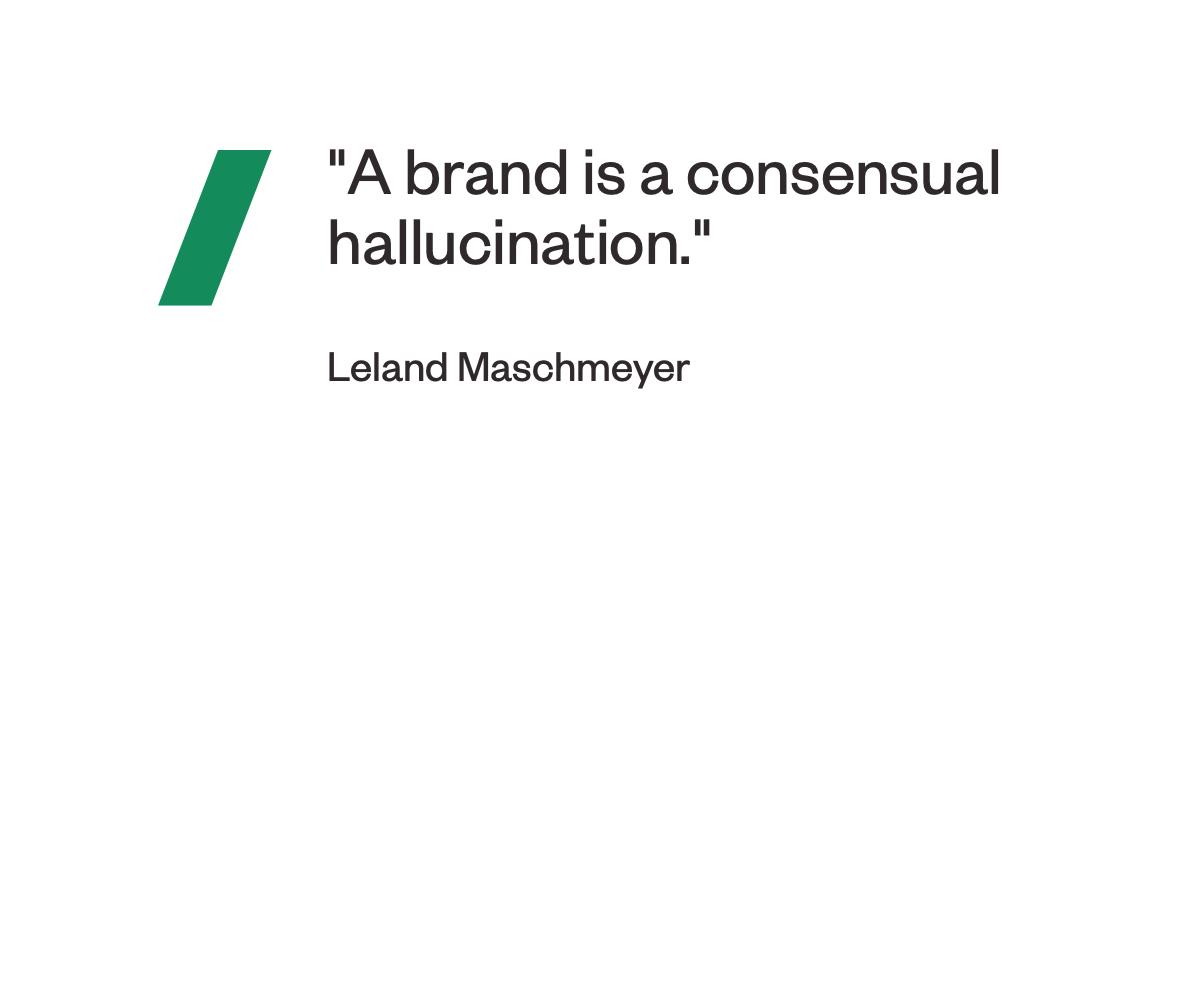
A brand is a consensual hallucination and a useful fiction.
A strong brand lets you raise your price, wins preference on the shelf and makes media dollars work harder.
The client cares about two things, strategy and the outcome. Selling time ties agencies to output instead.
Ross's take: what this means for your brand
Ross Drakes, founder of Nicework: I love how Leland Maschmeyer systematically created an asset with the Chobani brand. Chobani built a thing as neutral as yogurt into a business valued at $20 billion by making people feel an emotional connection to it. This is the perfect example of brand becoming an asset. The name starts carrying equity onto other pieces. That's how we work at Nicework.
Highlights
"A brand is a consensual hallucination. A brand is an imagined reality. It is a useful fiction." Leland Maschmeyer, co-founder and CEO of COLLINS
"When you're inside the company, you just want to survive to the next day and be a little better tomorrow than you were today." Leland Maschmeyer, co-founder and CEO of COLLINS
"No one's going to put a great opportunity on a silver platter for you. You have to go and make that stuff happen." Leland Maschmeyer, co-founder and CEO of COLLINS
"The client cares about two things, strategy and the outcome." Leland Maschmeyer, co-founder and CEO of COLLINS
About Leland Maschmeyer
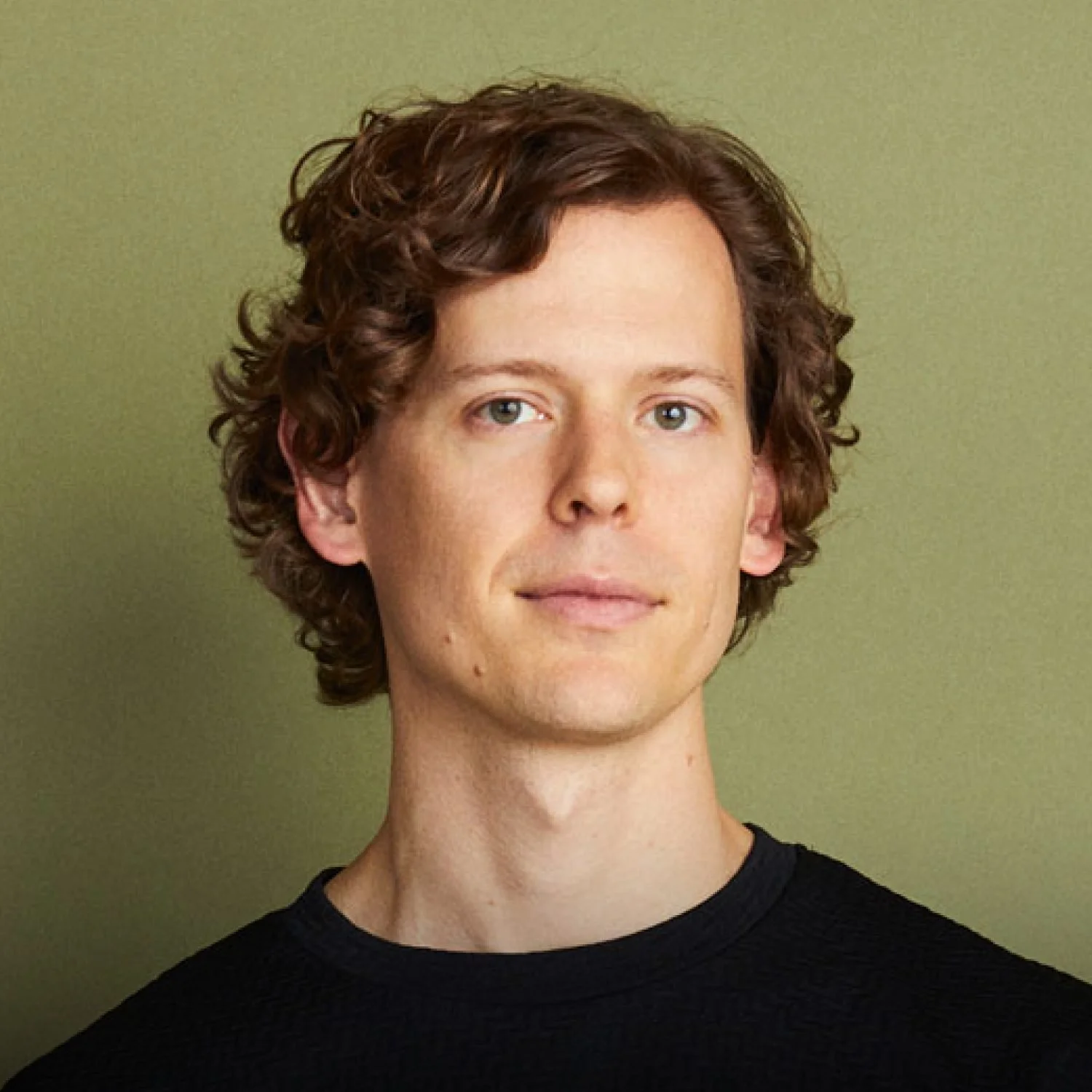
Leland Maschmeyer is the co-founder and CEO of COLLINS, a brand design firm. In 2016 he joined Chobani as its first chief creative officer and later became chief brand officer, leading the rebrand and building the in-house team behind it. He also founded Chobani's new ventures arm. The World Economic Forum named him a Young Global Leader in 2020, and he sits on the board of The One Club for Creativity.
Credentials:
Co-founder and CEO of COLLINS
Chief creative officer, then chief brand officer, at Chobani, 2016 to 2021
World Economic Forum Young Global Leader, 2020
Board member, The One Club for Creativity
Find Leland here:
Full transcript
-
Ross Drakes: So you've got quite an interesting CV. You've been through all sorts of things. You've been on the agency side. You've now switched to Chobani to be the head of an internal team. Can you talk a little bit about how you moved from building brands for people to building an in-house brand, instead of building it for people, almost building it for yourself? What was that transition like? And do you find there to be a different way of approaching it depending on if you're sitting on the agency side or whether you're actually sitting in the seat in the company?
Leland Maschmeyer: Yeah, totally. So one of the reasons why I was very early on in my career attracted to the world of brand and brand building is because it was a very inclusive discipline. It was a big tent discipline, right? Because everything is your brand, and so for me that was always really interesting as a portal into lots of different kinds of conversations. It could be about ad campaigns or packaging or identity. It could also be about internal culture and company structure and company purpose and things like that. So I love the expansiveness of it. So for me, moving from the agency side to the client side really wasn't that big of a difference. When I made the decision, it was just that I was moving to the other side of the coin. And I expected a lot of the things that I learned on the agency side to translate well into the client side, and of course I expected to learn some stuff and have unique experiences on the client side. What was really interesting to me is the learning that I had about when you're actually in a company and building a brand. It is very, very different than being on the agency side advising companies to build a brand. And I think you can probably catch the sense of that just in the language that I used. On one side you're building a brand, on the other side you're advising others how to build the brand. So the relationship dynamic to the brand is very different, one from ownership to consultant. It's not to say that they are apples and oranges, but they are still very different in some significant ways that is sometimes hard to wrap your mind around at first, because you're trying to apply an agency mindset and an agency approach to building things in a completely new context, where none of that stuff matters. Because when you're on the agency side, there's so much to do and there's so many other priorities to handle other than brand building, because when you're on the agency side, that's the most important thing, the brand is the most important thing. When you get on the client side, it's one of the important things, sometimes it's even lower down the list than you might think depending on the conversation and the time. But yeah, they are two very different things, but I'm very thankful to have had the experience of both.
Ross Drakes: And what was, in that experience, I love that language of building the brand versus advising how to build. What do you think, where do you think the agencies fall, not short, but where their work stops, that they could hear a little bit about what the clients need to actually continue to build that brand, to actually take it to market and connect it?
-
Leland Maschmeyer: Yeah. Well, I think the important thing is to know that a lot of people client-side aren't brand builders. It's just not their expertise. Brand building is a collective outcome. Lots of people doing their own specific work. So you may have someone who is in procurement and sourcing, right, who's making decisions related specifically to procurement and sourcing, but obviously in any number of industries the ingredients and the sourcing strategies affect your brand. You may have someone who works in shopper marketing and is focused on the dynamics of a retailer relationship and is making decisions according to what is going to be most successful in a retailer relationship dynamic. Of course, some of that adds up to a brand. So there's very rarely one person or one department that is responsible for the brand. Everyone client-side is doing a piece, is making a piece of the brand puzzle, and you just hope that senior leadership has enough vision, communication ability and consistency in the narrative that they're telling that everyone in the company starts thinking with a holistic mind and is making all these micro and nano decisions that in the short run don't seem like they're making a significant impact on the brand. But when everyone across the company is making all those micro and nano decisions under the same vision and long-term ambition, that adds up to the brand, and that's really hard to manage. Everyone has different competing agendas and ambitions and personal perspectives and different takes on what is right for the brand or not, and so you're really managing a lot of tiny, tiny decisions on the client side. And so again, no one is expert at building a brand. You're just expert at the one function that you do. When you're agency side, you are expert on advising people how to build a brand. So what that means is you are trying to pass along frameworks, language, tools, analysis or diagnostic tools to help people understand where their brand is right now and where they need to push it, and then what actionable steps, even assets, that they can use to help shape it and move it in another direction. So the language is very different on the agency side. It's about teaching, and oftentimes delivering the assets and tools. And then on the client side, it's about trying to figure out how, in between the decisions you have to make for your specific function that you're leading, how can you make a decision a little bit more of a brand-supporting decision or not. And so that's probably the crux of the difference between the two experiences.
Ross Drakes: I love that idea, because I'm not sure if every creative gets that idea that we're actually teaching people and having to hand over these tools. I hear a lot of people complaining about, "Oh, look what they've done to the brand. Look, they took my work from this high level and they've executed it so poorly." But I find the disconnect there is that you don't realise that the people who are executing the brand don't have Illustrator. They don't have Photoshop. They don't have ten years of design experience. They just don't possess those skills, and the tools that you gave them weren't necessarily the right thing for them to do their job properly. When we recently took the jump and we've started a few projects where we're going to own our own brands at Nicework, it's been such an interesting journey. So normally when you're printing stuff, you're trying to print the most impressive thing ever and use as many finishes as possible and make it look as beautiful. And now suddenly that we're paying for the printing, the conversation dynamic changes. We're like, okay, where's the right amount of spend so that the packaging looks good but also doesn't destroy all of our profits and therefore make this product not a real product and more of a passion project? So that's been a fun journey for us to go on, and I think has given us a lot more empathy for how clients need to think about the work that we do for them and how we can help them to think that journey through a little bit better.
Leland Maschmeyer: Yeah, and I have a friend here in the United States who runs his own midsize agency in the Southeastern United States, and he started a, so he has his agency and then he started a product company, a beer company. He's one of the most awarded and successful people in the history of advertising and just loved by everybody and a huge champion of the world of creativity and design and things like that. And as a business owner, he's like, "I can't do any of that. It's too expensive to do any of that. It'll crush my margin, it'll destroy it. I can't be the best marketer for my brand because I don't have the money to do that, and I have all these other problems." The warehouse and distribution and just getting awareness of the product. I have these very basic needs, and I think it's a really great contrast in what an agency context aspires you to do versus what leading a business aspires you to do or inspires you to do. So in the agency context, you want to put a dent in the universe. You want to do something so cool and breakthrough that people take notice, and you may measure that in terms of awards, you may measure that in terms of cultural resonance, you may measure that in terms of what kind of impact it has on the company. But when you're inside the company, you just want to survive to the next day and be a little better tomorrow than you were today, and you have all of these things that you have to manage: the energy, morale, money, in the case of my friend, retailer relationships and stuff like that. It is so complex and exhausting to manage all that stuff that you're just like, "I want to be a little better tomorrow than I am today and I'll be happy." And then it's the belief that over time you'll eventually make a dent in the universe because your company will be so remarkable. But for right now, I just want to be a little better tomorrow than I am today. So that's a big gulf between two people who are at the table talking about brand building with each other.
-
Ross: I like that. So can you tell me a little bit. When you took over the brand at Chobani, you had quite an interesting approach. Can you talk about how you approached building the brand, and what the steps were that you took when you got there?
Leland: Yeah, sure. So I was at Chobani for four and a half years. I've since left, so I'm not there anymore. But when I went there, Chobani was a strong company, but they definitely needed some coherence and clarity, and representation of the brand, to help them in the next stages of growth. So I set out a four-year agenda where the first year I called fix the fundamentals. The second year was, I can't remember the exact language, but it was something like get the marketing engine humming. The third year was push innovation outside of Greek yogurt, and then the fourth year was create cultural resonance and impact. So the first year was really the perspective of how do we fix all the plumbing, and the stuff behind the scenes, so that we can execute effectively and coherently and with beauty and brilliance over the next four years. So that was everything from the brand strategy to product positioning to re-architecting the product portfolio to redesigning the identity and the identity system around it, and getting some core capabilities built in the marketing, design, creative and media departments within the company. I mean, this was like the unsexy behind the scenes stuff that nobody really saw except for the brand relaunch. So we had a few KPIs that we tracked ourselves against to make sure we were doing that really well. Then the second year, which is getting the marketing machine humming, that was all about saying, okay, we have the capabilities and the people and the frameworks we need to think in one mind and to be able to execute as one mind. Now we need to figure out what is the approach to marketing that is going to drive the growth of the core business, because I knew if we weren't contributing to the financial success of the company, it didn't matter anything else after that. You have to take care of the core of the business before you can start expanding beyond. So that's where the marketing and advertising really took the lead in what we were doing, whereas the first year it was really design and strategy and brand. This time it was more marketing strategy and processes and approach. So we took that very seriously, we experimented a lot to figure out what was working for our brand. We redid our ways of working within the organisation so that we worked with different functions like shopper marketing and sales within the organisation better, and again similarly we had our own KPIs to let us know if we were doing well on that or not. So we eventually got to a point where we felt we were doing good enough on that, and then we continued to push on that and improve on that. But then that's when we started turning our eye towards innovation. And so I started working much more closely with the internal innovation team, worked on building out an innovation pipeline and strategy and roadmap for the different types of products that we were going to get into. I founded the new ventures arm of Chobani, where what we would do is we would look at opportunities in the marketplace, we would make decisions as to whether or not that was something we wanted to do internally, buy a company, or what we essentially outsourced, meaning, in food language, it would be co-packing. You would essentially hire a factory rather than do it in-house. You would hire a factory to make the food for you for a certain amount of time, and there are benefits and drawbacks to all three of those things, so it really depended on what the category was that we saw the opportunity in. And it was great. We took the traditional private equity mergers and acquisitions model and we literally flipped it on its head, so rather than calling it M&A, we called it A&M, acquire and mentor, because the big flaw that we saw in the industry was that a lot of these companies were being bought and then just gutted. The people were being kicked out, the business models were being changed. The only thing that didn't change was the brand, but everything else below the brand, people, processes and finance, would get changed and gutted, and then the company is a shell of itself. And so the whole acquire and mentor thing was about saying how do we really bring people in and respect them as new partners in this process and really protect the integrity of the company. So we did that for a few years. We got to a point where we were pushing into new categories, not just beyond yogurt but even beyond dairy. So a lot of that stuff was in the pipeline, and when that stuff was in the pipeline we started turning our attention to cultural impact as the fourth pillar. Luckily this all had the right cadence in terms of a calendar year, so by the fourth year we were on having cultural impact. So we started doing things that were more around how do we build the brand through playing a role in culture and somehow having cultural commentary, and there were various different ways that we experimented and tried to figure that out. We were actually just starting to ramp up some more significant work in that, and then COVID hit and then the multiple global crises hit, so it poured water on the fire that we had been building. But that was totally understandable. I was really proud of the work that the team was doing and we had a lot of great momentum behind it. So that was the step process that we went through during that four, four and a half year period.
-
Ross: I mean, you stepped into many different places that someone with a brand title might not traditionally go. How did, was this, did you drive this? Was this something that you saw as critical? How did you design this position for yourself? And I think there's probably a huge amount of convincing other people inside the organisation to include you and let you do the work with them, because this isn't just one man running around a business making waves. There's probably many people, different departments, that are involved. How did that all come about?
Leland: Well, luckily I recruited a number of people on my team who are excellent at things that I'm terrible at, so I made sure to recruit for that specifically, so a lot of the success is due to them. And also, within the culture of Chobani, Chobani is a growth organisation. It's focused on doing things better and different. It doesn't mean it's always easy, and it doesn't mean that you get yes for everything that you want to do. There's obviously a lot of uphill battles and convincing and persuasion that you have to do, but as a general stance the organisation has a tolerance for risk. So there was a context in which this was possible. There was an open spirit of conversation around it, and there's also the attitude of, if you have a better idea, bring it forward, and if it's better, it doesn't matter what function you sit in, it doesn't matter how old you are, you'll get a fair listen to your idea, and if it's great, we'll do it. So one of the things that I charged my team with very early on was saying, genius steals opportunities. There's no one who's going to bring you a great brief. There's no one who's going to present you, because I hired a lot of people who were from the agency side, no one's going to put a great opportunity on a silver platter for you. You have to go and make that stuff happen. Whether that's you invent your own brief because of an opportunity that you see, or you see something done within the organisation that isn't being executed with excellence and you believe that you can do better, go do it better. Put an idea on the table, challenge other people and other functions to level up their game by bringing ideas that beat their ideas. It's not to say that it's about competition, but it's about encouraging a culture of not just being on repetition, but a culture that is about making things better and making things happen. And so sometimes you have to put pressure on people and create a sense of competition for people to wake up and be like, oh, I've got to do more than just what I did yesterday. There's the old saying that if you're still doing what you did five years ago, please stop, and if five years from now you're still doing what you were doing five years ago, you're destroying the company. We all have to advance and evolve and do things differently, and so that was very much the spirit that I was always trying to cultivate within the company, and that allowed a lot of this migration of myself and my team into lots of different nontraditional areas of the company.
Ross: Now, I want to ask you
Leland: There's also, I was just going to say the other thing that I was going to say was just that I have a very broad perspective of design. I practise capital D design, which to me is the creation of desirable change. So I don't see design as just a craft. I think craft is a subcomponent of design, and a very important subcomponent of design, but the discipline should not be defined by its crafts. It should be defined by the impact it seeks to make in the world, and that is creating desirable change.
-
Ross: I think that, I mean, I'd love to ask you at this point, what do you define a brand to be? Because in that last while you talked about, you've touched the visual components of it, the design and the feel of it, the tone, the people delivering it, the products that are being delivered, the markets that we're thinking about, the way we're entering those markets. You're exponentially expanding the brand. How would you define it? Someone says to you, Leland, what is a brand? How do you answer that question?
Leland: A brand is a consensual hallucination. A brand is an imagined reality. It is a useful fiction. So a company is nothing more than a story and a bag of money. If the story wasn't there, and the money wasn't there to support the translation of that story into real world behaviours, structures, impacts and so on, the company wouldn't exist. I mean, if you take Nike, for example, let's say every Nike office and factory around the world burns down. Did the company go away? No, it would just take out a loan from a bank and build again. Let's say every piece of clothing that Nike made and every television commercial disappeared. Would Nike go away? No, they would just make more. Let's say the legal document that incorporated Nike was burned and disappeared. Would Nike go away? No, because people would still think of Nike, they would still have images of Nike. Nike would be like Santa, in the sense that Santa's not a physically real thing, but it's so real in our imagination that it shapes our behaviours. So there's a difference between the reality of, like, computer, door, something you can physically touch, and the reality of imagination, where something stays in our mind and changes our behaviour. Just think of kids around Santa or the Easter Bunny, or the idea of money. Money is a consensual hallucination. There is no inherent value in a paper bill or a metal coin. We choose to believe in it because it makes it easier for us to do things together. In the case of money, to exchange things. In the case of a brand, to work together, to have a common goal, to have a common set of values with which we prioritise, to have a shared story and sense of identity. Brands are useful fictions. They are nothing but stories. And when you think of it from the consumer side, think of why you buy a heavy, durable good like a dishwasher or a fridge. You don't know anything about dishwashers and fridges. But you know something, you feel something, about the brand. You know, oh, that company, they've been around a long time. My mom used it a lot. I have friends who said good things about it. I would like to have that brand in my kitchen. Okay, I'll buy that. What about that was a real decision? Nothing. It was all a story that you held in your mind about that brand and therefore that product, and so you bought it. It made it easier for you to buy it. Or when you wear Nike on your chest versus some unknown athletic brand, what Nike says about you is a useful fiction to you, to help you feel better. So these things create persuasion. They persuade buying behaviour. Now, that is fundamentally what a brand is. It is a corporate mythology. I'm a big believer in the idea of pattern, and that stories are a form of pattern, that mythologies are a form of pattern. They tell us how the world is structured, what's important in that world, and then how we move through that world. So if you think of any big company, those characteristics are exactly the same. It's an imagined story about how the world works, about what's important to us and what it will take to succeed. Anyone who runs a company will tell you those are the most important things in a brand for their company. That's why they hammer home the brand over and over again to their employees and to their consumers. So it's a useful fiction. Or if you prefer to call it, it's a corporate mythology. And oftentimes those corporate mythologies are repetitions of ancient Greek mythologies. So here in the United States there's a company called Target, who became very famous for making design available to the masses. So you took something that was of the elites, it was highly desirable and made life better, and you gave it to the majority of people who desperately needed it, because it would make their life better. That's the Greek mythology of Prometheus, of bringing light from Mount Olympus down to the humans so that they could survive. You have Nike, I'll use Nike again. Nike is the story about overcoming, about the champion inside of us overcoming all obstacles to achieve that self enlightenment, that apex of who we are. That's just the Greek mythology of Hercules, a mere mortal going through all these trials thrown at him by the gods to emerge so victorious that he becomes a god himself. And isn't that what we do with athletes?
-
Leland: Put them on a pedestal and they become almost gods in themselves. So I can go down the list of tons of different companies whose consensual hallucinations are simply Greek mythologies dressed up in the clothing of their time and their corporation and their category. That's what a brand is. Now, there's also the conversation about, practically, mechanistically, what does a brand need to do in terms of its performance in the business, to know that you actually have built a brand? So I think there's a few things. One is it needs to increase your pricing power. The more that you can convince people and persuade people with the brand, the more you're able to increase the perceived value of your product, and therefore you can raise your price without people complaining. The second thing is it can influence purchase decisions. If you're looking between two products on a shelf, you reach for that product because of the way it makes you feel, and so you get preference drivers out of it. And then the third one is it makes your media dollars work harder. If you're continually investing in a common story over and over again, you don't have to do much to trigger those emotional equities in people other than just sometimes show people the logo. I think Nike, again just because everyone's familiar with it, is a really good example of that. You could take a cheap shirt and put the Nike logo on it, and all of a sudden it's a cool shirt. You could make a very weird piece of graphic design and put the Nike logo on it, and all of a sudden it becomes a cool piece of graphic design. It's because both of those things become imbued with those emotional equities that have been built over millions of dollars and decades of consistent emphasis. So all of a sudden the things that you communicate with become that much more powerful, because they're communicating so much more than just what is on the surface. And so what you get out of that is more effective media dollars. For every dollar you spend on making this up, you get ten dollars of impact, because it's more memorable, it resonates more emotionally, and so on. So you get all sorts of financial benefits from building a product. Building a brand effectively and consistently over years, and recognising that at the end of the day, a brand is nothing but a consensual hallucination that has very significant business benefits to it.
Ross: I love that you've got this philosophical take and then it also becomes exceedingly practical at the end. So do you think the Greeks were the best brand builders that we've ever seen? But I think time has just lifted them up, mark, they've got sort of, but they can never be measured against anyone else because they were the only ones who wrote anything down.
Leland: Yeah. Well, I think Western culture has certainly drawn from Greek culture the most, and therefore it's the most resonant with us, because it's the soil in which many of our stories have emerged or been replicated. To say that they're the best of, you know, in time, who knows. I don't think there's such a thing as a best. But to say that the Greeks are the most influential to us, yes, they are, because it's also the earliest recorded mythologies and traditions and rituals that we have in as complete a fashion as we do. Certainly we have it of earlier cultures, but we don't have it as replete with stories and as robust of narratives as we do from Greek culture. So because of that, those tend to be the ones that we pull upon and draw our inspiration from the most. But yeah, Greek culture, as one of the cultures we can learn from, is a really remarkable mythological structure from which to draw, and get lots of inspiration. It's an endless well of inspiration that we can draw from every day.
-
Ross: And I love this idea because it also taps into how we as humans behave. So, a story. My cousin drove a Mitsubishi Colt when I was 15, and in that moment I looked at it and thought, Barry's the coolest dude I know, and he's driving this thing, therefore this thing is the coolest car that you can have. Fast forward five years' time, I justified to myself, I had all of these practical reasons as to why I should purchase a Mitsubishi Colt. I was like, I can move this around and I can do that, and fuel economy and blah blah. But the reality is, if I really, really looked deep in my heart, it was because Barry had one, therefore I wanted one, and I bought it. And that car made me very happy for the nine years that I drove it around. But the decision was caked in logic, and it actually was completely illogical. There was no real reason that I should have wanted that car, except I did.
Leland: Yeah, I mean, look, making rational decisions is cognitively taxing. It takes a lot of energy and burning of calories to make rational, well thought through decisions. I mean, one of the worst decisions that economists in their history ever made was establishing this somewhat useful fiction of homo economicus, the person who makes the most rational decision in their best interests. It was only partially useful, because it was only useful to economists to make flawed models. It was not useful to anyone else, because it was in no way a reflection of reality, and you're a perfect example of that. We're all driven by emotion because emotion is less taxing. We like patterns in our lives because we want to know what's right. And when we're not following a pattern in our life, we have to build the pattern on our own, and that is what rational work does. It says there's no obvious path for me towards the best outcome, I need to build my pathway, my pattern of knowledge, to reveal what that right answer is. And that takes a lot of effort on an individual level. And if you're doing that, whether you're buying a car or a house or a can of beans, you can't do that with every decision, or even, like, which way do you turn at an intersection. You want to just go on autopilot and just go. And that's what brands, really well built brands, help enable. They override that need for that rational structure building and just say, look, it's really good. We're consistent. We're authentic. We're credible, and we're delivering something of clearly communicated value to you in this specific instance, with products that have a reputation for being excellent. Then people just go on autopilot. You make it easy for people. And if we know one thing from technology, it's that easy always wins, much like an easy lie spreads faster than a complicated truth. No one wants to tax their brain figuring out the rationality and logic of something. They just want the easy answer, even if it is not in their best interest.
Ross: This is why we have flat Earth running around and spreading a lie. That's super interesting. So.
Leland: Yeah, exactly. I mean, it's just, yeah.
-
Ross: What role do you think people who are building brands should take? I love this thought that the easy lie perpetuates faster than the complicated truth, and brands are so culturally important and they shape narratives. What role do you think brands should be playing in our societies? We're lifting them up onto these pedestals and, like you say, they're corporate mythologies. They actually are just corporations underneath. The mythology that our companies were, what did you say? They're just a bag of money and the story. What do you think those bags of money should be thinking about and doing with their brands?
Leland: Well, so are you, and this is part of the area where it gets troubled talking about brands. Are you talking about brand as in a marker of identity and narrative, or are you talking about brand as a company and what companies should do and what role they should play?
Ross: Well, I suppose I'm asking, companies are the ones that are building and creating these narratives. What role do you think they should be thinking about? It's quite easy to think that companies should be standing up for societal issues, but I don't always see that aligning with the story that the company's telling. How do you think companies should navigate this space? There's seemingly more pressure on companies to make some kind of a stand or draw some sort of a line in the sand and be more clear, whereas I think they've historically been able to skirt those issues if they felt the need to.
Leland: Yeah, I think that's a complicated question, because on one hand, look, you have all the way up to the Supreme Court talking about how companies are humans. And then you have this, what I would consider antiquated but still nonetheless present, ideology from Milton Friedman that says the only purpose of a company is to make profit for its shareholders. In that wide range, it's tough to make a declarative statement that sweeps across all companies, because I think companies are just organisms like any ecosystem. There are people at the top of the food chain. There are companies at the bottom of the food chain. There are net good, there are net bad, there are all sorts of checks and balances that have to be in place for this diversity of creatures in an ecosystem to coexist in the most beneficial way possible. So this idea of making a sweeping claim that all companies should be this way or that way, I don't think is realistic or even rooted in any biological reality. Because if you take farming, for example, the richest, most productive areas of land are often the ones that are the most diverse in terms of the different types of crops and plants and whatever that are all packed in together in a very tight space, and all of them have a different role to play complementing other ones. Other plants within that ecosystem, some put nitrogen into the ground, other plants suck up that nitrogen to grow, some are meant to be low-level plants, some are meant to be high-level plants providing shade to the other plants that need less sunlight in order to produce the nitrogen to put it into soil and stuff. So it's a very complex arrangement of different types of organisms that all need to play and do different things in order for the collective to grow, and I think it's the same way with companies. Absolutely there are some companies that should and have every right to take a position on purpose. I think there are companies that don't need to do that either, because it's not appropriate for them, it's not authentic to their business model, or it's an unnecessary pursuit, or maybe they do it in a different way. So I'm always wary of saying all companies should be this or that.
Ross: Once again, you're very philosophical and very practical, all at the same time.
-
Ross: Yeah. So on our call we were talking about, one of the things I asked you is what was interesting you at the moment, and you answered that's trying to figure out the business model for design and creativity isn't the best one, and you were trying to think of better ways to leverage those two things as a business model.
Leland: Yeah, so I think in general the creative industry is having its come to Jesus moment with its business model. The industry has for too long sold time as its measure of value. Obviously that is in opposition to what clients really want. Clients don't want you to take a longer time working on something, right? But if you're incentivised to take a long time because that's how you make more money, obviously there are opposing incentives in the relationship, which is not a good basis for a relationship. And time obviously is in no way a reflection of the value that agencies create. And the other thing that is tough is that a lot of agencies, whether you're design, advertising or other, are too often selling the production costs of deliverables with a markup on it. So whatever it costs to make something great, we'll throw twenty percent on top and then here's the bill. So then what you're doing is you're tying yourself to an output, and the output is quite frankly one of the least important things to a client. The client cares about two things, strategy and the outcome. Those are two things we're willing to pay a lot of money for, and when we sell time or when we sell a product or output, we're not in any way benefiting from any of the outcomes that we create. And remember my comment earlier is that design is about creating desirable change, so we should be incentivised by the change we create, not the tactics or the objects we make to incentivise that. The other big problem with that is we give away the strategy. We actually, if we even charge for it, we undercharge for it because we put too much value on the output. So already, they're not paying attention to the thing that the client wants to care the most about, and we're underselling and selling for cheap, if not for free, one of the things that the client wants to pay the most money for, and then we're charging on the thing that the client wants to pay less for. And so already in that we're struggling with an economic business model. Now the other big challenge with all of this is award shows. Award shows play an incredibly important role in the development and the sense of mastery of individuals in their career. Absolutely, I pursued winning a lot of awards as part of the Chobani experiment, because I wanted validation from a third party to say that we were doing excellent work that was competing with any other agency in the world. The problem becomes when we think awards are evidence of our worth to clients. There are so many websites for agencies that I've been on where they list all the awards on the front of the page, and we think that that is going to increase the perceived value of the agency. It does, because again, clients care about outcomes and strategy, nowhere in there is awards. Awards are kind of like signals that maybe you're talking to someone who's an expert. But if you can't move beyond the awards conversation and flashing the medal in front of the clients, you're on a downward slope in terms of your perceived value. Awards are nice, but they are not everything, and too often we treat them as everything. So the challenge becomes for agencies to figure out what it is that agencies need to do to more attach what they do to outcomes. There's an entire world of discussion around this that, frankly, a lot of people in the creative community aren't a part of because it's uninteresting sounding. I mean, to be kind of honest, who wants to talk about price point? Who wants to talk about how to write proposals? Who wants to talk about different incentive models and ways of measurement? It's just not interesting, but it is necessary, and sometimes we have to do what is necessary to get to where we want to be. And so I think there needs to be more people who look at the agency business models as a design problem rather than a business problem, because that's what it is at the end of the day. It's a design problem. We are using, to put it bluntly, old world business models in a new world. And that's why so many of these agencies are being driven to lower price points per project, being driven to project-based work, being driven to commoditisation by procurement. It's because we're not working hard at finding those new business models, and there's a lot of great conversation out there and a lot of really interesting ideas out there that can be applied on a project-by-project basis, can be applied on a client-by-client basis. So it's not that agencies need to totally shift, kitchen sink and all, to a new model overnight. It's that they need to start experimenting with what's going to work in their business and also learning and engaging in those different dialogues, so that we know how to get the real credit for our type of work and also ensure that clients understand the real value that we're bringing is not a colour scheme, it's not a typeface, it's not a logo, it's not an ad. Those are just things we do in the process of creating desirable change for our clients, when really it's the knowledge and the strategy of knowing what to do and then the evidence that we can create that change. Those are the things that we need to emphasise. I mean, I could go on for a whole other podcast, but I'll just stop right there.
Ross: I love it. It feels like we've beautifully come full circle. I think you've been in the agency world and you've now also been in the client world, and I think the design problem is how do we merge those worlds together slightly more, because that is where the business model lies. If we look at the music industry, it's a great example. Streaming has changed the way we buy music. It's fundamentally altered how people record, where they distribute, how they sell, how they monetise it. It's fundamentally shifted the entire industry, and I think we're also sitting at a similar kind of point. I'm not sure if the technology was the best thing for the musicians. It just is what it is, what has happened. So if that conversation had been slightly different, potentially there would have been a slightly better outcome for the musicians in the industry.
Leland: Yeah, I mean, like with all sorts of technologies, it depends on where you sit looking at the technology whether you deem it morally good or bad. So I think in the design context we have to shift where we're sitting to look at these changes or these pressures that are being put on the agency model, not as "oh, that's the way it is now", but to say what is it saying about how we're working? What is it saying about what we're not doing well? What are the opportunities we're missing out on? Because we've got to jump out of the fish bowl and jump into a new fish bowl if we're going to save the agency business model. And look, at the end of the day, this is also, if you take a biological ecosystem approach to it, for a long time brand-oriented agencies, whether you're an ad agency or a design firm, were the alpha predators in a very limited agency ecosystem. There weren't a lot of different types of agencies to compete with, and these two were alpha predators because they were the ones who controlled brand, which was the biggest leverage of purchase persuasion in the marketplace given the economic dynamics. Now we're in a very different place, where experimentation, analytics, performance marketing, growth design, things like that, ecommerce, those are the biggest drivers and creators of persuasion, the biggest creators of revenue. So a whole new class of agencies has emerged, multiple new ones have emerged, further enriching the agency ecosystem, and so the alpha predators are no longer the alpha predators. So it's not that we're trying to get agencies to go back to the way it was. We have to recognise that we're now in a much more complicated and rich and dynamic ecosystem of agencies, and we have to figure out, if you're a brand agency, what is the brand agency's potential in that ecosystem, and how can you complement and show distinctive, differentiated value to those other agencies in the ecosystem who are experiencing meteoric growth because they're brand new. They're working from a small base, small size, so their growth can be fast and steep, but eventually they're going to level off too. Eventually all growth flattens out. There's no such thing as infinite growth. And so what happens now in an ecosystem where everything's stable and you have a much greater diversity of very strong agencies in it, I think that's a really interesting question to start talking about: positioning, agency narrative, agency business models and so on, because it's what's needed to move forward.
Ross: I think that's such a great note to end the podcast on, Leland. Thank you so much for your eloquence and your philosophy and your practicality. I got a lot out of this. Thank you very much, awesome.
Leland: Thank you for having me.
Related episodes

Ben Crick: How do you balance craft and scale?

Karin Fyhrie: Are your purpose and values wrong?

Matt Brownell: Why build your brand on a budget?
Previous episode: #92 Aaron Draplin | Next episode: #94 Rasmus Wängelin | All episodes
One More Question is made by Nicework. Hosted by Ross Drakes. Work with Nicework